
Jan 11, 2017
Recently, the Fort Worth Court of Appeals unanimously affirmed a trial court’s jury verdict and judgment obtained for clients of Curnutt & Hafer, L.L.P. in a nursing home death case.
Lead counsel and firm partner Kelly Curnutt commented on the victory: “The jury recognized a track record of elder patient neglect by the nursing home’s management, and we applaud the appellate court for vindicating the jury’s verdict.”
Business trial lawyers Kelly Curnutt and Doug Hafer are both Board Certified in Personal Injury Trial Law by the Texas Board of Legal Specialization.
“Although our firm continues its long track record of protecting its corporate clients’ interests, from small businesses to Fortune 500 companies,” said Doug Hafer, partner, “we also take pride in helping victims of serious injury and death due to negligence.”
Nov 17, 2016
Team to deliver expertise, success to Wise County
Business trial law firm Curnutt & Hafer, L.L.P. has opened an office in the old Domino Hall on the historic square in Decatur, TX. The office is Curnutt & Hafer’s second location, with its first in Arlington, TX.
Partner Kelly Curnutt said the firm “saw an opportunity to create long-lasting partnerships in Decatur and Wise County through service as advocates, champions and active members of the community.”
“Over the years, we have developed connections and relationships throughout the state of Texas,” said Doug Hafer, partner. “This network allows us to accelerate our work and bring our clients resolution quickly, efficiently and successfully.”
Curnutt & Hafer, L.L.P. was founded by Kelly Curnutt and Doug Hafer in 2000. With their years of experience and success in handling complex commercial litigation as well as personal injury and death cases, the partners have an established practice that provides clients both big firm expertise and an individualized approach.
Curnutt & Hafer will combine its state-wide reach with local expertise by welcoming Pat Wadlington, attorney, and Robin Stout, community relations coordinator and case manager, to the Decatur practice.
“Pat and Robin are extremely knowledgeable and capable,” said Curnutt. “We’re thrilled to begin our Decatur practice with such a talented team.”
An official opening event for the Wise County office of Curnutt & Hafer, L.L.C. is planned for early 2017.
About Curnutt & Hafer, L.L.P.
The team at Curnutt & Hafer provides high-quality representation focused on bottom line results. A recognized business trial practice and listed as a “Go To” litigation firm in the Fortune 500 list of attorneys, they have the know-how and experience to solve every legal problem, whether in the boardroom, the field or the courtroom. Areas of practice include commercial litigation, oil and gas litigation, franchising, insurance coverage and bad faith, will disputes and probate litigation, and injury and death cases. Visit CurnuttHafer.com to learn more.
###
Aug 12, 2016
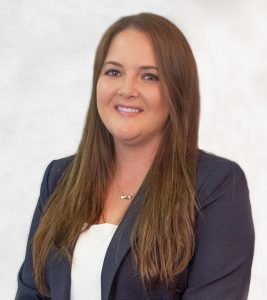 Curnutt & Hafer is pleased to welcome Jamie M. Lacy as our newest associate. Jamie received her J.D. from the University of Southern California Gould School of Law, graduating in the top 10% of her class. She also holds an M.B.A. from the University of California, Riverside.
Preceding her experience with Greenberg & Weinmann in Santa Monica, Jamie externed with the Financial Industry Regulatory Authority, Inc. (FINRA) and the U.S. Securities and Exchange Commission (SEC). Her article “The New Asset-Level Disclosure Requirement: How it Will Affect the ABS Market” was published in the USC Business Law Advisor in May, 2015.
Areas of Practice:
- Commercial Litigation
- Oil and Gas Litigation
- Franchising
- Insurance Coverage and Bad Faith
- Will Disputes and Probate Litigation
- Injury and Death Cases
ABOUT CURNUTT & HAFER, L.L.P.
The team at Curnutt & Hafer provides high-quality representation focused on bottom line results. A recognized business trial practice included as a “Go To Litigation Firm” in the Fortune 500 list of attorneys, we have the know-how and experience to solve your legal problem, whether in the boardroom, the field or the courtroom.
Aug 10, 2016
In a unanimous opinion, the Dallas Court of Appeals affirmed a summary judgment obtained by Curnutt & Hafer for a client involved in a construction accident lawsuit. Kelly Curnutt, who argued the case in both the trial court and the appellate court, summarized the rulings:
“The appellate court did an excellent job of analyzing a voluminous trial court record and articulating why the trial court correctly ruled in our client’s favor. The take-nothing judgment for our client on all the plaintiff’s claims was the right result.”
May 24, 2016
In Hoskins v. Hoskins, the Texas Supreme Court strictly enforced the Texas Arbitration Act (“TAA”) by ruling that courts cannot vacate an award based on an arbitrator’s “manifest disregard” of the law. In this regard, the Texas high court held that the vacatur grounds listed in the TAA are the only way to get an arbitrator’s ruling tossed — and manifest disregard isn’t listed in the TAA.
The issue in Hoskins was whether a party seeking to vacate an arbitration award under the Texas Arbitration Act could invoke extra statutory, common law vacatur grounds to avoid an erroneous arbitration award. The TAA allows a trial court to vacate an award for three main reasons: (1) if an award was obtained by fraud or corruption; (2) if a party’s rights were prejudiced by an arbitrator’s evident partiality, corruption, or misconduct; or (3) if the arbitrator exceeded his powers. See §171.088 of the Texas Civil Practice & Remedies Code.
In Hoskins, court rejected manifest disregard of the law as a basis to challenge an arbitration award:
The TAA’s plain language confirms that, in proceedings governed by that statute, section 171.088 provides the exclusive grounds for vacatur of an arbitration award. Because manifest disregard is not included in section 171.088, and because the parties did not agree to limit the arbitrator’s authority so as to authorize vacatur on that basis, [an] attempt to vacate the award on the basis of manifest disregard must fail.
In a concurring opinion, Justice Don Willett noted that the issue of whether manifest disregard is a viable reason for vacatur has tied up federal courts for years and the U.S. Supreme Court has yet to address whether that common law doctrine comports with the Federal Arbitration Act. That is not the case under Texas law: “No such uncertainty exists with regard to the exclusivity of the TAA’s vacatur grounds … [e]xclusive means exclusive.”
Hoskins should be of concern to the many businesses that rely on arbitration clauses. In order to protect against an erroneous application of the law, those that rely on arbitration must include a clause in the arbitration agreement that allows for appeal and vacatur on the basis of manifest disregard of the law. Otherwise, you may be stuck with an unjust result based on legal error, because in Texas: “Exclusive mean exclusive.”
By Douglas R. Hafer
Business Trial Lawyer | Curnutt & Hafer, LLP
Apr 20, 2016
The Texas Supreme Court issued two rulings on April 15, 2016 that favored parties seeking attorney fees. In Sullivan v. Abraham, a First Amendment case, the Court examined the criteria for the award of attorneys’ fees under Texas’ anti-SLAPP law (“strategic lawsuit against public participation”), which requires mandatory awards of reasonable attorney fees and does not allow a court to reduce the amount for equity and justice. The case is significant because the Texas Supreme Court takes great effort interpreting the statute authorizing attorneys’ fees. This opinion is a primer on the importance of language, grammar, and punctuation when considering a statute. Applying these rules, the Court ruled that the law’s language and punctuation mean reasonable attorney fees are awarded to the winner of a motion to dismiss without consideration of factors such as justice and equity.
In Wheelabrator Air Pollution Control v. City of San Antonio, the Texas Supreme Court found that a city does not have governmental immunity from an attorney fee claim dealing with the activities of a city-owned public utility company. Immunity would apply if the case arose from the city’s governmental function, but not if it arose from the city’s proprietary function. The Texas Supreme Court has distinguished between those functions and acts performed as a branch of the state, and those performed in a proprietary, non-governmental capacity. Under Texas law, a governmental act or function are those things done as a branch of the state—such as when a city exercises powers conferred on it for purposes essentially public pertaining to the administration of general laws made to enforce the general policy of the state. An example would be “garbage and solid waste removal, collection and disposal.” Proprietary functions are those functions performed by a city, in its discretion, primarily for the benefit of those within the corporate limits of the municipality. The operation of a public utility by the city was found to be proprietary under Texas law and did not give the city immunity.
By Douglas R. Hafer
Business Trial Lawyer | Curnutt & Hafer, LLP